Finding patterns in the Supreme Court’s decision-making is an easy game. You will see an occasional deviation depending on the issue, but just knowing whether a justice is liberal or conservative gives you a lot of predictive power. Knowing their philosophy also helps. Currently referred to in the context of textualism, some justices decide constitutionality by looking at the words printed on paper, while others interpret based on what they think was the intent of the legal document.
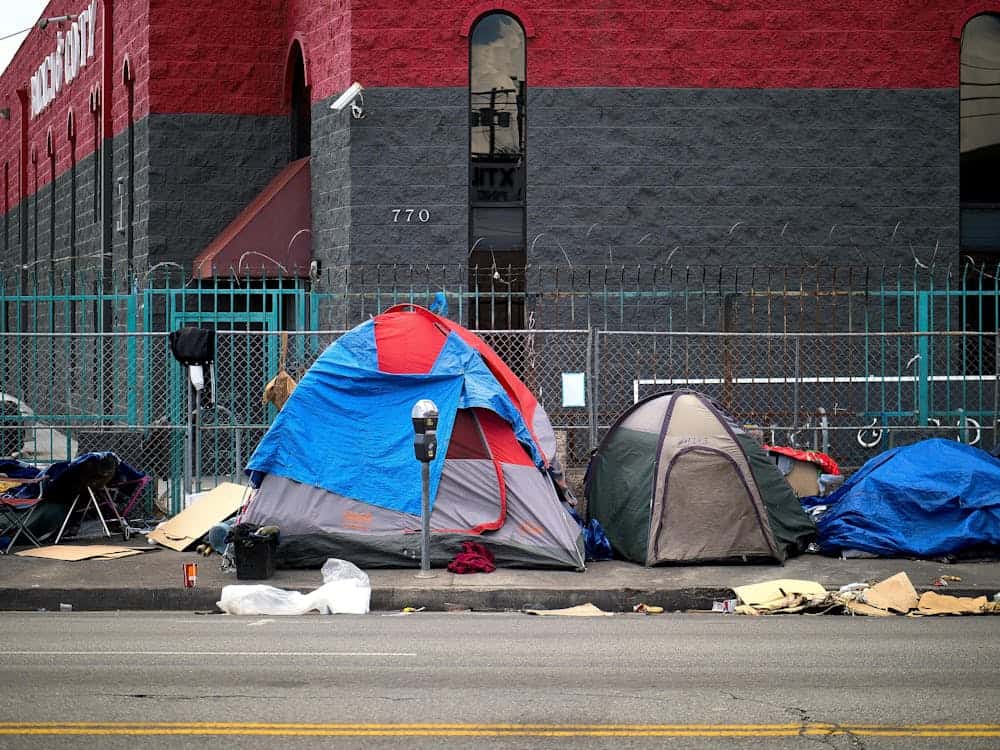
In the Grants Pass case, the Supreme Court overturned two prior decisions by the 9th Circuit; Martin v Boise (2018) which banned local governments from penalizing people for sleeping in public when there were no available shelter beds; and Johnson v. Grants Pass (2020) which extended that prohibition to public camping bans that punished people for sleeping outside when no shelter was available. In those decisions, the 9th Circuit’s reasoning was based on the 1962 Supreme Court case Robinson v. California. At that time, and in that case, the Supreme Court struck down a California law that made it illegal to be addicted to drugs.
When you create a law that only applies to a certain class of people, it is known as a status offense. The Supreme Court claimed the 8th Amendment bans “status crimes,” and being addicted to drugs was a status crime. In the Grants Pass case, the 9th Circuit reasoned that “being homeless” is a status crime, and therefore is covered by the 8th Amendment.
Supreme Court Justice Neal Gorsuch, a proud textualist, disagreed. In writing for the majority, he made two claims. One, that the Grants Pass law banned the conduct of “camping,” not the conduct of “homelessness;” and that the banning of camping in a park applied to everyone, not just to those who are homeless. Therefore, the homeless have no status. And two, Gorsuch also argued that the penalties instituted were “common practice penalties,” and did not constitute anything that looked cruel and unusual.
Supreme Court Justice Sonia Sotomayor wrote for the Minority and was joined by Justices Kagan and Jackson. According to Sotomayor, “It is possible to acknowledge and balance the issues facing local governments, the humanity and dignity of homeless people, and our constitutional principles.”
“The City of Grants Pass jails and fines those people for sleeping anywhere in public at any time, including in their cars, if they use as little as a blanket to keep warm or a rolled-up shirt as a pillow,” Sotomayor continued, “For people with no access to shelter, that punishes them for being homeless. That is unconscionable and unconstitutional. Punishing people for their status is ‘cruel and unusual’ under the Eighth Amendment.”
For the liberal justices, the homeless do have status; and following any current standard of human decency, arresting them for this when they have no place else to go is cruel and unusual.

 Calvin Mouw